Utility loses its hardness.
EMERGING · CONFIDENCE 82
工業素材に、やわらかさを
Industrial material is being separated from industrial attitude. Aluminium, sheet metal and exposed fabrication are becoming lighter, more tactile and easier to live with.
What we see
The shift is not simply “more metal.” The interesting movement is the combination of visibly engineered material with domestic scale, rounded geometry and craft language.
Recent Japanese presentations connect precision sheet-metal work with light furniture, treat CMF as a spatial system, and preserve raw aluminium character while moving it toward sculptural everyday use.
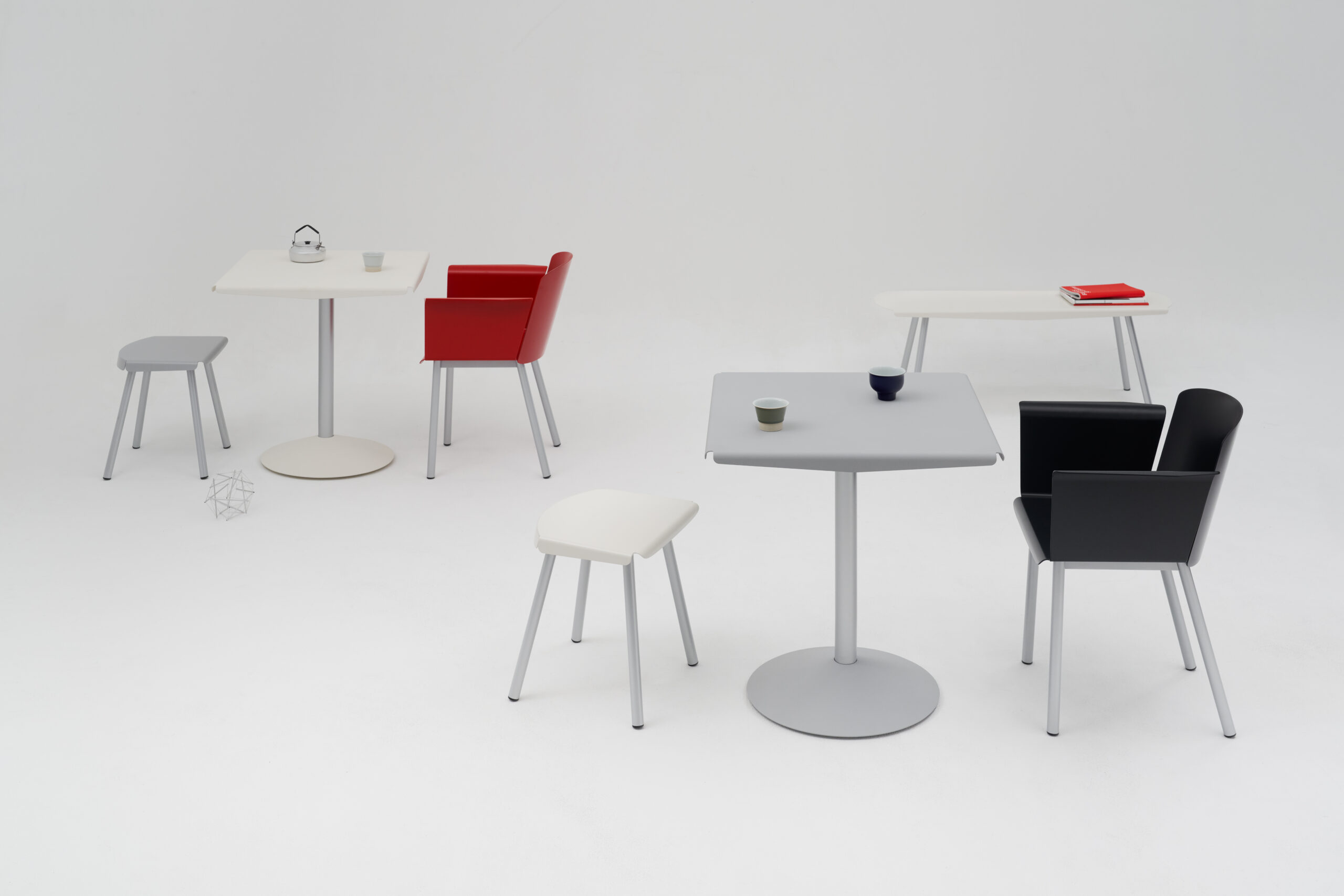
折り曲げた金属を家具のスケールに落とし込む点に注目。構造の見せ方と、暮らしになじむプロポーションを一緒に読み取る。
画像引用・出典: Japan Benex / EETAL × KUO DUO 引用元が配信する画像を表示しています。制作・撮影者等のクレジットと詳細は元記事をご確認ください。Why now
- Consumers are fatigued by anonymous minimalism but still want visual calm.
- Fabrication stories give simple forms cultural and commercial specificity.
- Reflective and pale metal surfaces perform well in compact, image-led spaces without adding visual mass.
Design direction
- Space: pair powdery blues, warm whites and muted greens with one visibly fabricated metal element.
- Product: soften folded sheet and extruded profiles through radius, scale and touch points—not decorative coating.
- Retail: use workshop logic selectively: one rail, plinth or light system should reveal how it was made.
- 避ける: generic “factory” styling, black steel grids and distressed finishes. Those codes already read as theme rather than signal.
Evidence
- EETAL × KUO DUO — HIKOU aluminium furniture collection, 2025
- DESIGNART TOKYO — From Error to Mirror, 2025
- DESIGNART TOKYO — Cooked Matter / Crafted Space, 2025
- Porro — Ryo folded-aluminium system by Nao Tamura, 2026
The cover is an editorial visual, not documentary evidence. Confidence is an editorial assessment of cross-category evidence and momentum, not a market-share forecast.