One sign, many materials.
Watch · FREE SIGNAL
The Arrow as Material Trial
Holding the information shape constant can expose how material, light and placement change what a sign communicates.
What we see
- The Japan Sign Design Association used its 60th-anniversary Grand Sign Exhibition to show eleven contexts through a past–present–future frame.
- Nakagawa Chemical describes ten sign-making companies using a common arrow shape for material and process trials.
- Tokyo Midtown Design Hub hosted the exhibition from April 24 to June 7, 2026.
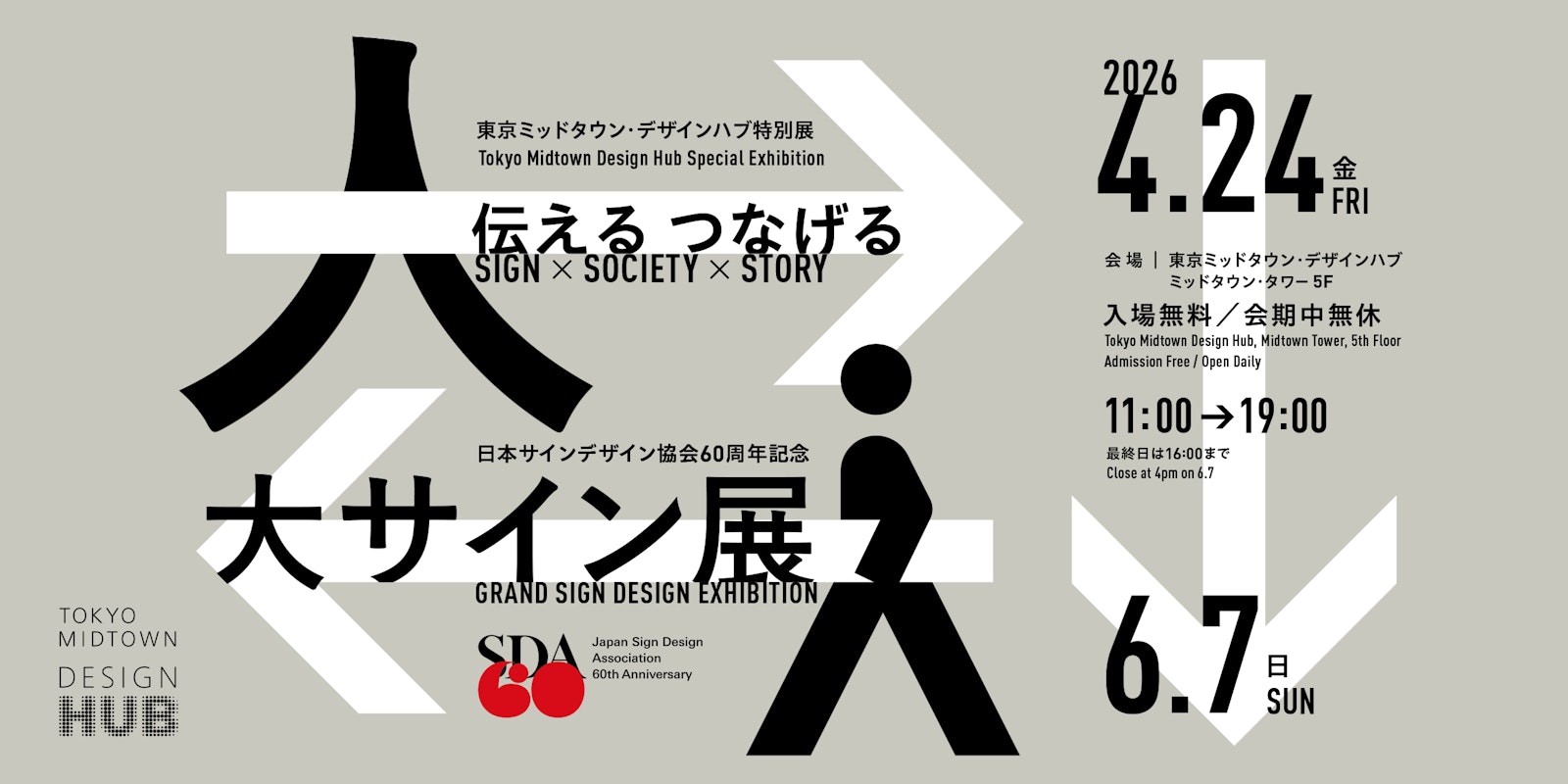
The sign exhibition key visual introduces communication as a design subject. Compare it with the article's material arrow trials; do not confuse a poster with the trial itself.
Image quotation / source: Tokyo Midtown Design Hub / SDA Image served by the original source. See the linked article for creator / photography credits and context.Why now
- When a wayfinding mark changes shape and substrate together, a design team cannot tell which change altered legibility.
- A common shape creates a controlled comparison, though an exhibition wall is not a live navigation test.
Decision
Guidance for your next project—not a rating of the source or its makers.
Test one fixed symbol across three real surface-and-light conditions before committing to the system.
Expressive laminate effects until distance, glare and maintenance are measured in place.
Calling an exhibition specimen a validated wayfinding solution.
Direction
Photograph the same arrow at actual walking distance, day and night, against the proposed architecture.
Record substrate, finish, installation and cleaning alongside the graphic file.
Watch next
Seek occupied-building tests that show comprehension, glare and upkeep after installation.
Evidence
- SDA — Grand Sign Exhibition
- Nakagawa Chemical — exhibition contribution
- Tokyo Midtown Design Hub — exhibition details
No navigation-performance data is cited; the transfer from exhibition trial to actual wayfinding is an editorial hypothesis.